

Feeling the Fuel Pressure? What Employers Can Do Now
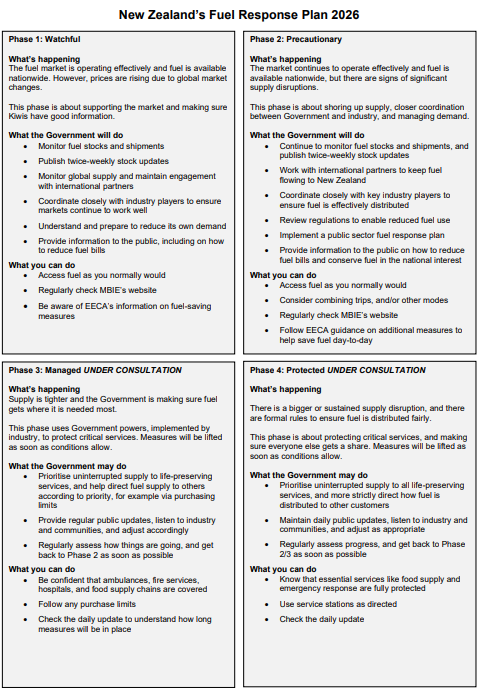
Following a government update on 27 March from Finance Minister Nicola Willis and Associate Energy Minister Shane Jones, New Zealand’s fuel response framework is now more clearly defined, with four phases outlining how the country will respond if fuel supply comes under pressure.
New Zealand is currently in Phase One (the “watchful” phase). Fuel remains available nationwide, and there is no immediate need for restrictions. However, fuel prices are increasing, and the Government has signalled that early stages will rely on businesses and households taking practical steps to manage demand. We will continue to monitor developments and provide updates if there are any changes to the current phase.
For employers, the impact is already being felt. Businesses with company vehicles or fuel cards are seeing costs increase, along with a noticeable lift in mileage and reimbursement claims. Employees, particularly those who travel regularly or commute longer distances, are also feeling the effect.
If your workforce includes company vehicles, fuel cards, or regular travel between sites or to clients, now is an appropriate time to review how travel is currently being managed.
A key starting point is checking what your employment agreements and vehicle or travel policies allow. The wording in these documents will often determine what changes can reasonably be made, particularly where travel, or vehicle use are specified as terms of an employee’s employment.
From there, the focus can shift to practical ways to reduce fuel use without significantly disrupting operations.
Depending on your business, this might include:
· reducing non-essential travel (e.g. using Teams or Zoom instead of in-person meetings)
· encouraging carpooling where employees are travelling to the same location
· allowing working from home where roles allow
· adjusting start and finish times to avoid peak traffic
· staggering office or site attendance to reduce overall travel
· consolidating trips or deliveries to minimise repeat travel
· planning routes and workloads to avoid unnecessary back-and-forth travel
Small, practical changes can help manage business costs and reduce the impact of rising fuel prices on both your business and your employees.
If this is something you are starting to see in your business, now is an appropriate time to take a proactive approach.
Knowhow can support you to assess your current arrangements, including reviewing individual employment agreements and policies, identifying any risks, and advising on how changes can be implemented appropriately. Please get in contact with Knowhow if you would like support reviewing your current arrangements or sense-checking your options.
Please see below New Zealand’s Fuel Response Plan 2026 which sets out the four phases.
For more information please see : https://www.beehive.govt.nz/release/fuel-plan-protect-economy-amid-disruption
Sylvia Wood
Director